What makes a vintage halloween font for haunted house signage work?
A vintage halloween font for haunted house signage delivers immediate atmosphere not just decoration. It’s the kind of typeface that reads like cracked plaster, weathered wood, or ink smudged on a 1930s carnival poster. You don’t need animation or glow effects. A well-chosen font signals “enter at your own risk” before a single prop is built.
When should you use it and why texture matters more than style
This font works best when printed on burlap banners, hand-painted plywood, or distressed foam board. It’s not for sleek digital menus or minimalist flyers. Think flickering porch lights, fog machines, and guests walking up a gravel path that’s the context where a rough serif with uneven stroke weight or subtle ink bleed adds authenticity. A smooth, vector-perfect gothic font might look sharp online but feels out of place beside cobwebbed lanterns and rusted gate hinges.
How to match the font to your haunt’s physical setup
If your signage is painted by hand, choose fonts with open counters and generous spacing like S-Spooky, which translates cleanly to brushwork. For laser-cut wood signs, avoid ultra-thin serifs or fragile terminals; opt instead for sturdier alternatives like those found in our Art Deco Halloween collection. If you’re printing on aged paper or kraft cardstock, test how halftone textures interact with fine details some fonts lose legibility when printed at low DPI or with heavy grain overlay.
Common mistakes and how to fix them fast
Using too many fonts on one sign is the top error. Stick to one primary typeface, plus maybe a simple sans-serif for small print (like “No refunds” or “18+ only”). Another frequent issue: scaling a delicate script font too small. Vintage doesn’t mean illegible. If guests squint at your “BEWARE” banner from six feet away, reduce ornamentation not size. Also avoid overusing drop shadows or bevel effects. Real haunted house signs rarely have Photoshop layers. They have chalk dust, nail holes, and fading.
Quick checklist before printing
- Test the font at actual sign size not just on screen
- Print a 4" × 6" sample on your final material (cardstock, wood, vinyl)
- Check contrast: black ink on weathered gray board? Try charcoal gray instead of pure black
- Verify spacing between letters tight kerning can blur on coarse surfaces
- Pair with a complementary vintage display font only if needed for example, the Vintage Circus typeface for secondary text like “Est. 1927” or “Admit One”
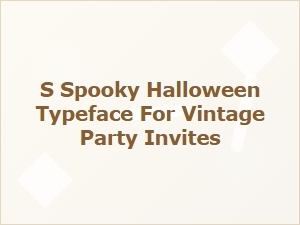 Spooky Vintage Halloween Typeface for Party Invites
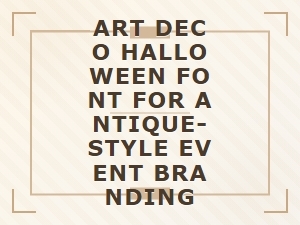 Art Deco Halloween Font for Antique-Style Events
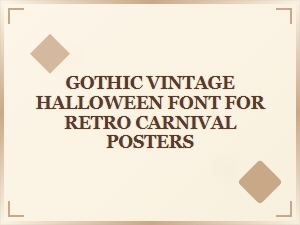 Gothic Vintage Halloween Font for Retro Carnival Posters
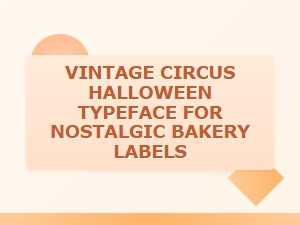 Vintage Circus Halloween Typeface for Bakery Labels
 Best Gothic Horror Fonts for Halloween Invitations
 Spooky Halloween Fonts with Blackletter Influence